

Between October and February, plush buyers are not only restocking characters and seasonal figures — they are building ranges around warmth. Wholesale plush hand warmers, hood hats, character slippers and travel pieces earn shelf space in gift shops, pharmacies and garden centres during the cold months, because they sell on comfort rather than on age. This guide covers the product families behind a winter plush accessories program, and the ordering terms to settle first.
Why Wholesale Plush Hand Warmers Anchor a Winter Range
Hand warmers sit at the impulse end of plush: compact enough for a counter display, inexpensive enough for an add-on sale, and emotional enough to be bought as a small gift. Unlike a large teddy bear, they do not need a dedicated fixture — a wire stand or a basket next to the till does the job, earning floor space in the quarter when it is most contested.
For a distributor, the same compactness works in the other direction. A container of winter accessories carries far more units per carton than a range of 35 cm figures, which keeps freight per unit low and makes top-up orders practical mid-season. The category also repeats well: a shopper who bought a rabbit hand warmer this year comes back for a different animal next year.
The Product Families Behind a Winter Accessories Program
A workable winter program is built from four or five families:
- Pocket hand warmers — animal-face designs with an opening for both hands. 2-in-1 variants fold out into a small blanket, roughly doubling perceived value for a modest material-cost increase.
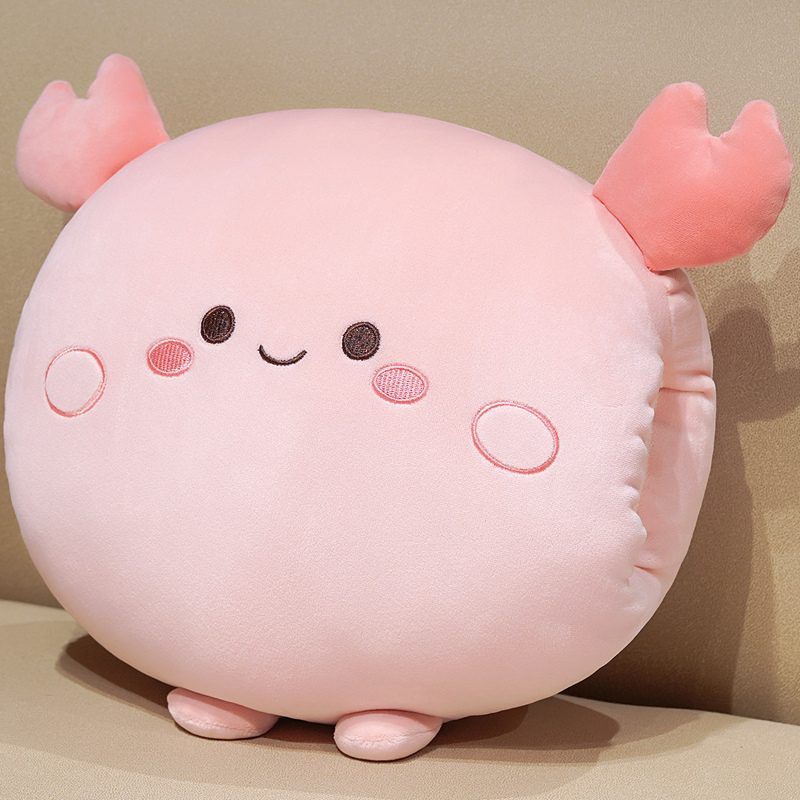
- Hand-warmer pillows — a round plush pillow around 30 cm with a side pocket; a cushion at a desk and a warmer on a cold morning. One design, two uses.
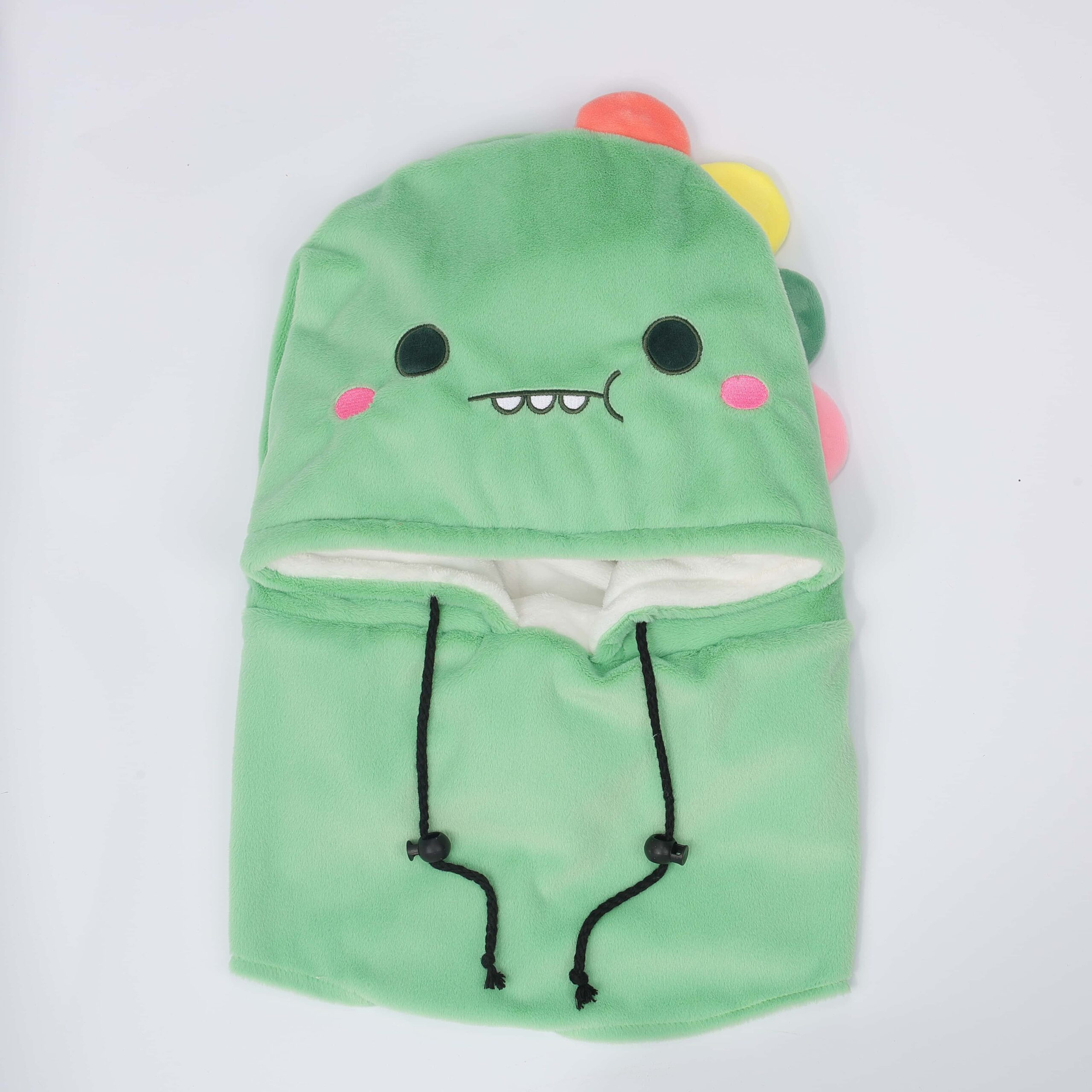
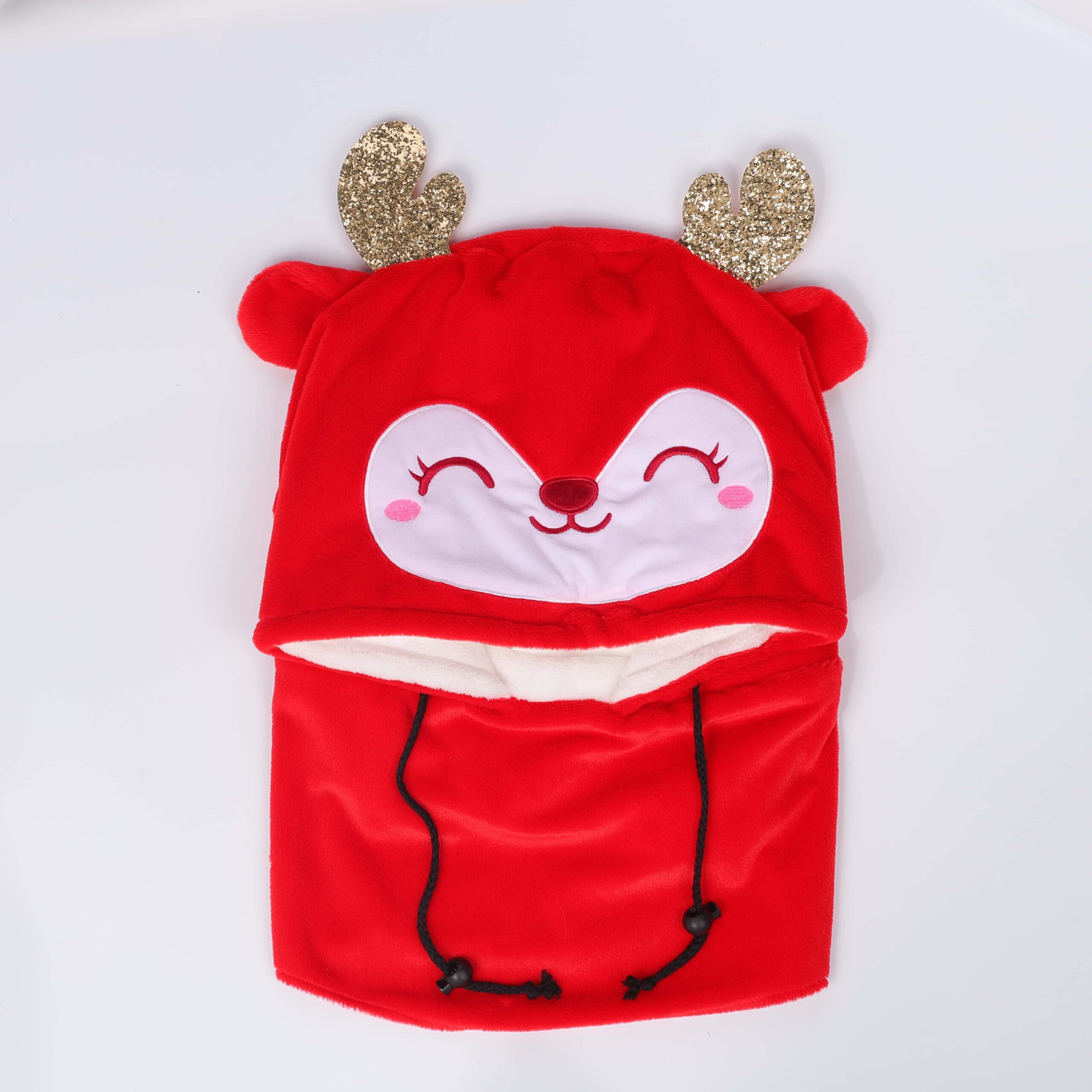
- Hood hats — animal hoods with embroidered faces, ears and horns. The same construction carries winter, Christmas and Halloween versions, so one pattern family covers three seasons.
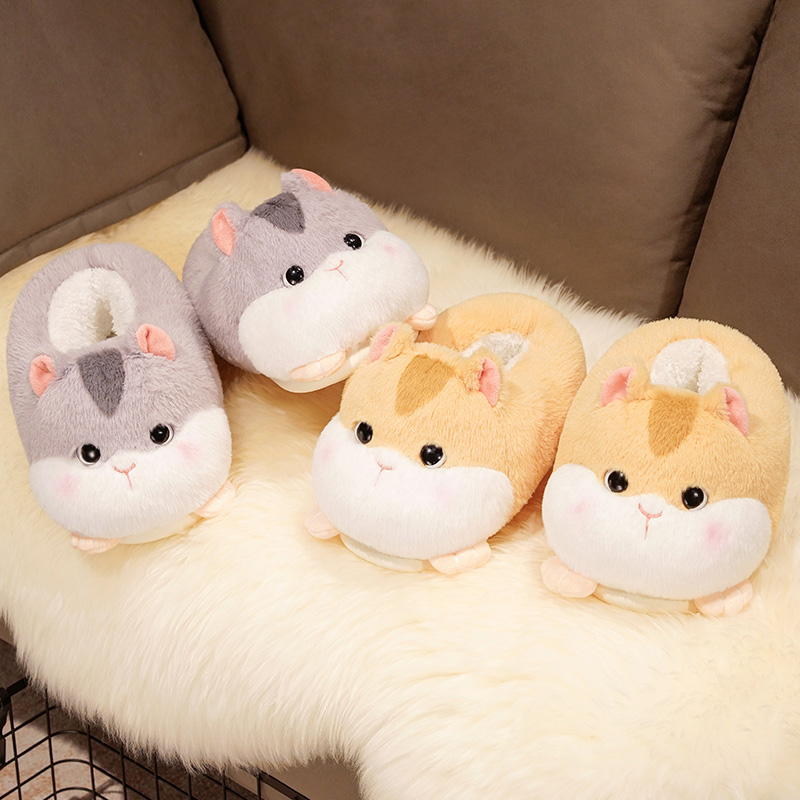
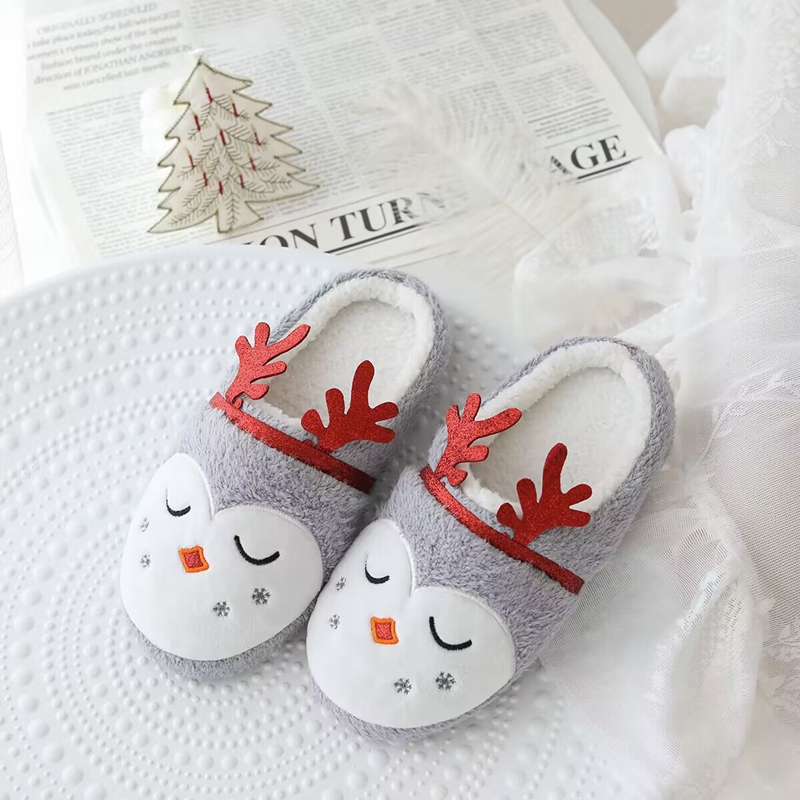
- Character slippers — plush slippers in animal designs, sold in paired sizes. Soles, lining and sizing tolerance need more specification than any other family.
- Travel and car pieces — U-shaped neck pillows, car accessories in the 28 to 30 cm band, and plush bags that ride along in the same shipment.
Sizing, 2-in-1 Designs and the Details That Sell
Within each family, a small size ladder outperforms a single size. A 30 cm hand-warmer pillow covers the desk-and-sofa use, while pocket warmers stay one-size. For slippers, size curves are the discipline: agree the size run and the tolerance with the factory in writing, because a slipper that runs one size small generates returns that erase its margin.
The details that sell are tactile. A sherpa or fleece lining reads warm before a customer touches the product, and embroidered faces survive handling better than printed ones while avoiding the small-parts question that plastic eyes raise on a wearable. The guide to plush fabrics and fillings explains how pile height and filling weight are specified on a purchase order.
Materials and Filling for Winter Plush
Winter accessories justify materials that a standard plush toy would not carry. Long-pile and sherpa fabrics add warmth and volume, quilted or brushed linings add a second texture at the opening, and heavier filling weight is expected in slippers and seat pieces, which are compressed under load. Specify each per item: outer fabric by name and weight, lining fabric, filling weight per size, and sole construction for slippers.
Recycled polyester is increasingly requested in this category, and it is a realistic option where the fabric mill holds Global Recycled Standard certification — ask for the certificate number and the transaction certificate for the specific batch, not just a logo. A factory holding FSC chain-of-custody certification can likewise supply hang tags and boxes on FSC-certified paper.
Compliance Points Specific to Wearable Winter Plush
Wearable plush is judged as both a toy and a garment, and the stricter reading applies. Hood hats are the case to watch: drawcords around the head and neck area are restricted for young children in several markets, so the age grading you declare should be a design decision — cord-free hoods for the youngest band, decorative cords only where the grading allows them. Slippers add sole material, slip resistance and embedded parts such as LED modules, which must be enclosed and included in testing.
Two rules keep this manageable. First, request finished-product test reports against your target market's standard, run on the construction you are actually buying, with the declared age grading in the same document. Second, check the factory's standing documents before the product documents: our own factory works under an ISO 9001 quality system (registration 12802508091S) with a current BSCI social-compliance audit (amfori ID 156-005327-000, valid through March 2027), and we hold GRS 4.0 certification for recycled-material toys (SGS certificate SGC-GRC11898-GRS-2026-10). The plush toy safety standards guide lists the paperwork to request before any deposit.
MOQ, Sampling and Order Structure
Winter accessories suit a mixed first order because the families share materials and production lines. Our standard minimum order is 500 pieces per design, and a first program typically works best as a small core of hand warmers bought deeper plus one or two hood hats and a slipper design bought as tests. Sampling runs on a set basis: a 20-piece sample set takes about 15 days, including any mould work for hard components such as sole inserts or clip fittings, so a full winter range can be sampled in a single round rather than design by design.
When you structure the order, confirm in writing which designs share a production run, how colourways count against the 500-piece minimum, and what the packaging is per family — a hand warmer on a hang card, a slipper pair in a printed box, a hood hat in a polybag with a head card. Packaging differences between families are the detail most often discovered after production.
Planning the Range Around the Winter Calendar
Winter accessories have two selling peaks, not one. The first runs with the Christmas trade, where festive versions — a reindeer hood hat, character slippers with antlers — sit alongside the seasonal plush and finish before the end of December. The second runs straight through January and February on plain winter designs, which sell at full margin without the markdown pressure of dated Christmas stock. Our holiday season planning timeline shows how both peaks fit into a backward-planned order calendar.
That double peak is also the argument for ordering early: plain winter designs can be confirmed in the main autumn production window, while festive versions share the Christmas capacity crunch with every other seasonal program.
Final Word
A winter accessories range earns its place by doing what large plush cannot: impulse prices, two selling peaks, and one character family turned into hand warmers, hats, slippers and travel pieces that repeat every cold season. Settle the families, size runs and compliance grading first, then buy depth where demand shows. To see these families as finished products, browse our plush slippers, pillows and soft home range and the Christmas plush collection, or read the buyer's checklist for choosing a custom plush toy manufacturer.
Related reading
- Bulk Plush Toy Shipping: A Buyer's Guide to Freight, Cartons and Landed Cost
- Plush Toy Packaging: A Buyer's Guide to Retail-Ready Bags, Hangtags and Cartons
- Plush Toy Trends 2026: A Wholesale Buyer's Guide to What Sells
- Plush Toy Care for Retailers: A Cleaning and Storage Guide
Keep exploring: Christmas plush collection, plush pillows and home range, or browse the full article library.